Mangroves
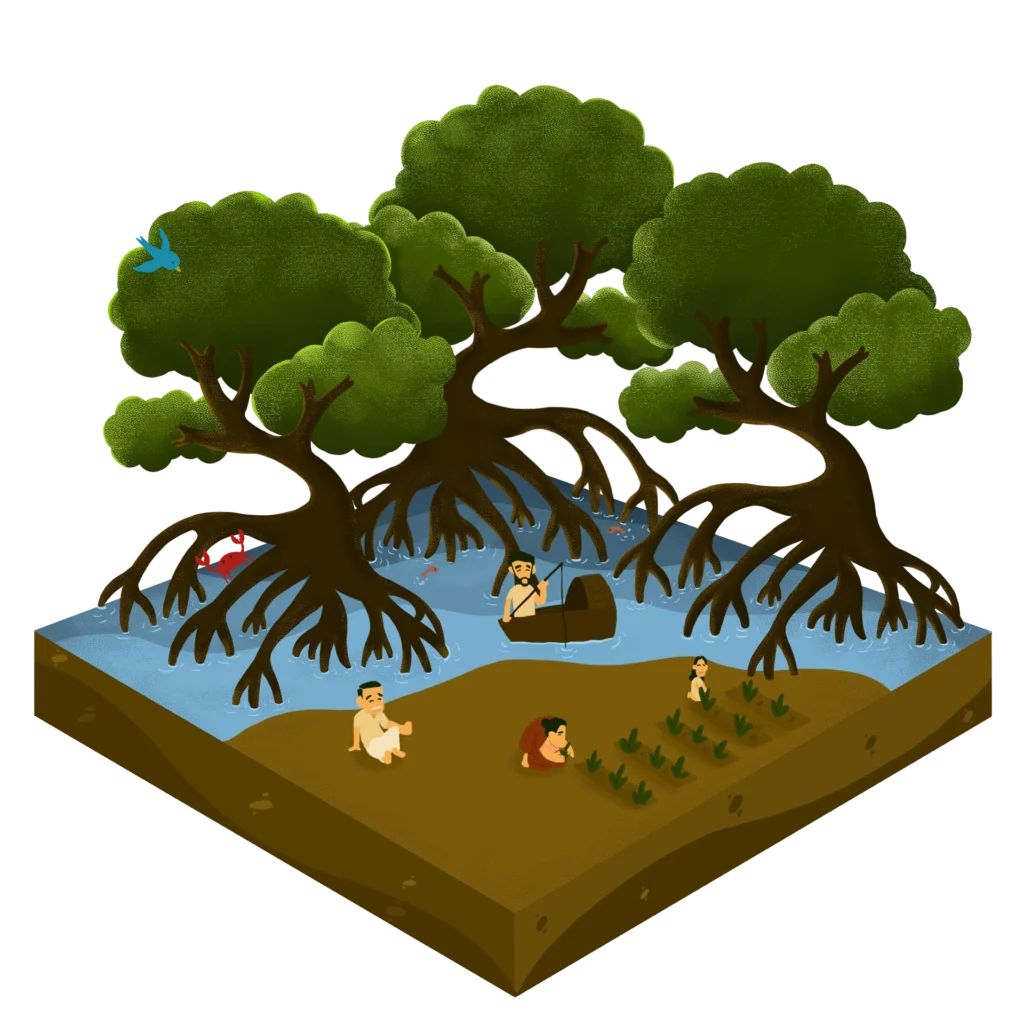
Unlike most commonly known plant species, mangroves are both valiant protectors of land and cradles of flourishing life.
How do we protect the shores that protect us?
India’s 11,098.81 km coastline faces relentless assault. Industrial waste flows freely into fragile tidal zones, and unplanned development fragments the remaining natural defence. Rising seas claim more land each year, and cyclones like Amphan remind us of our vulnerability when nature’s first line of defence disappears.

The answer lies in restoring what we've destroyed.
Mangrove forests shield entire coastlines from storms, sequester massive amounts of carbon, and support countless species. When mangroves thrive, communities survive.
These forests have adapted to survive where other trees cannot. Their roots filter salt from seawater and breathe through specialized systems. They capture carbon at rates that put most rainforests to shame, storing four times more per acre.
India’s 4,991.68 square kilometers of mangrove cover protects millions living along our coasts.
The SGI Way
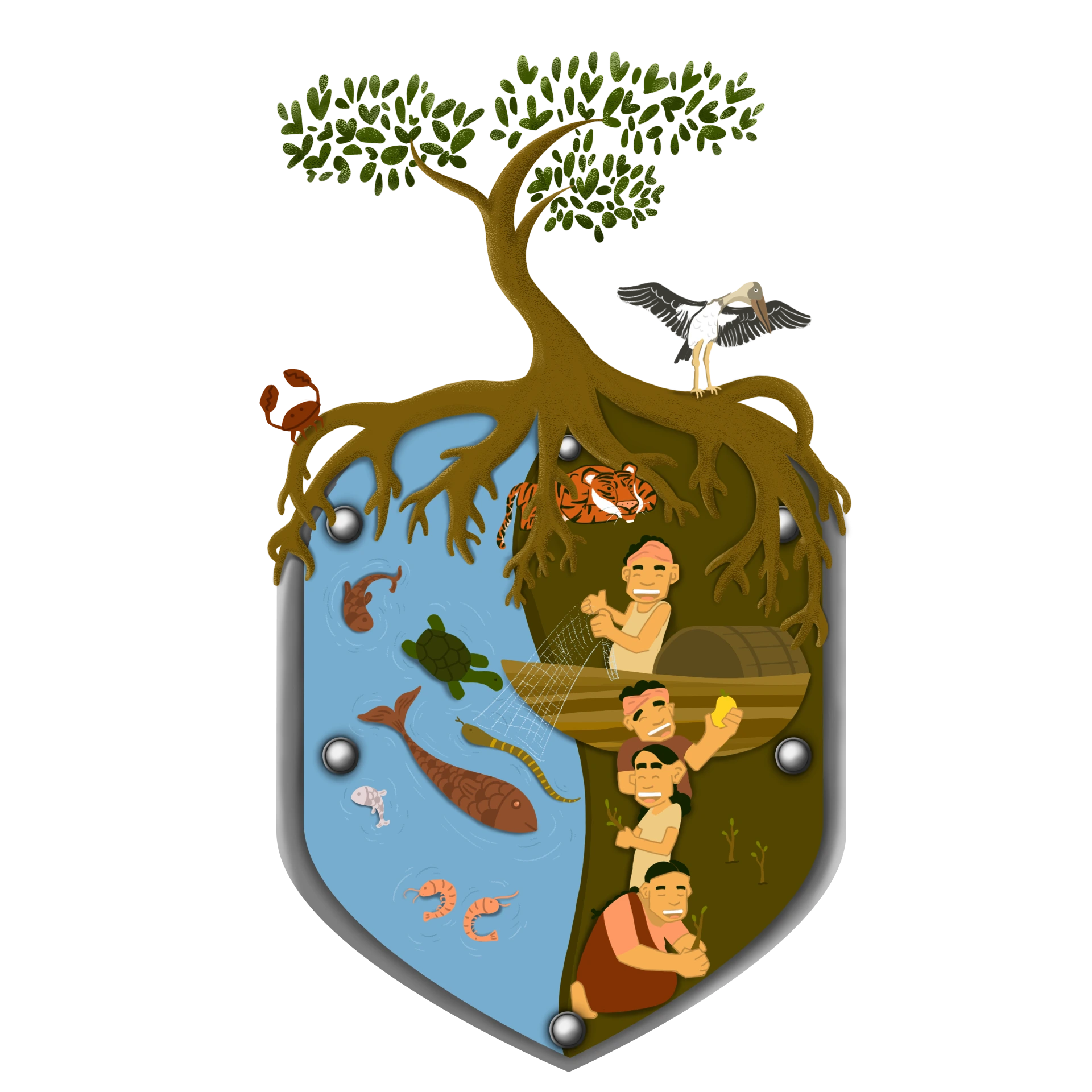
SGI works directly with coastal communities to restore the mangrove ecosystems their lives depend on. We turn local residents into active guardians of their own coastlines.
Our Three-Pillar Strategy
Community Employment
Engaging local communities in work such as seed collection, and a workforce consisting mostly of women, for plant nursery development, during planting and maintenance, while also supporting boatmen, porters for transport of seedlings and propagules.
Community Engagement
Educating and raising awareness within communities about the benefits of mangroves, enlisting their commitment to protecting and nurturing them to better protect their lives and livelihoods
Environment Protection & Soil Restoration
Planting mangroves to protect coastlines from climate calamities. They sequester four times more carbon than most rainforests thanks to the ecosystem they nurture. They filter out salt and breathe through their roots
How We Make It Happen
Pre-Planting
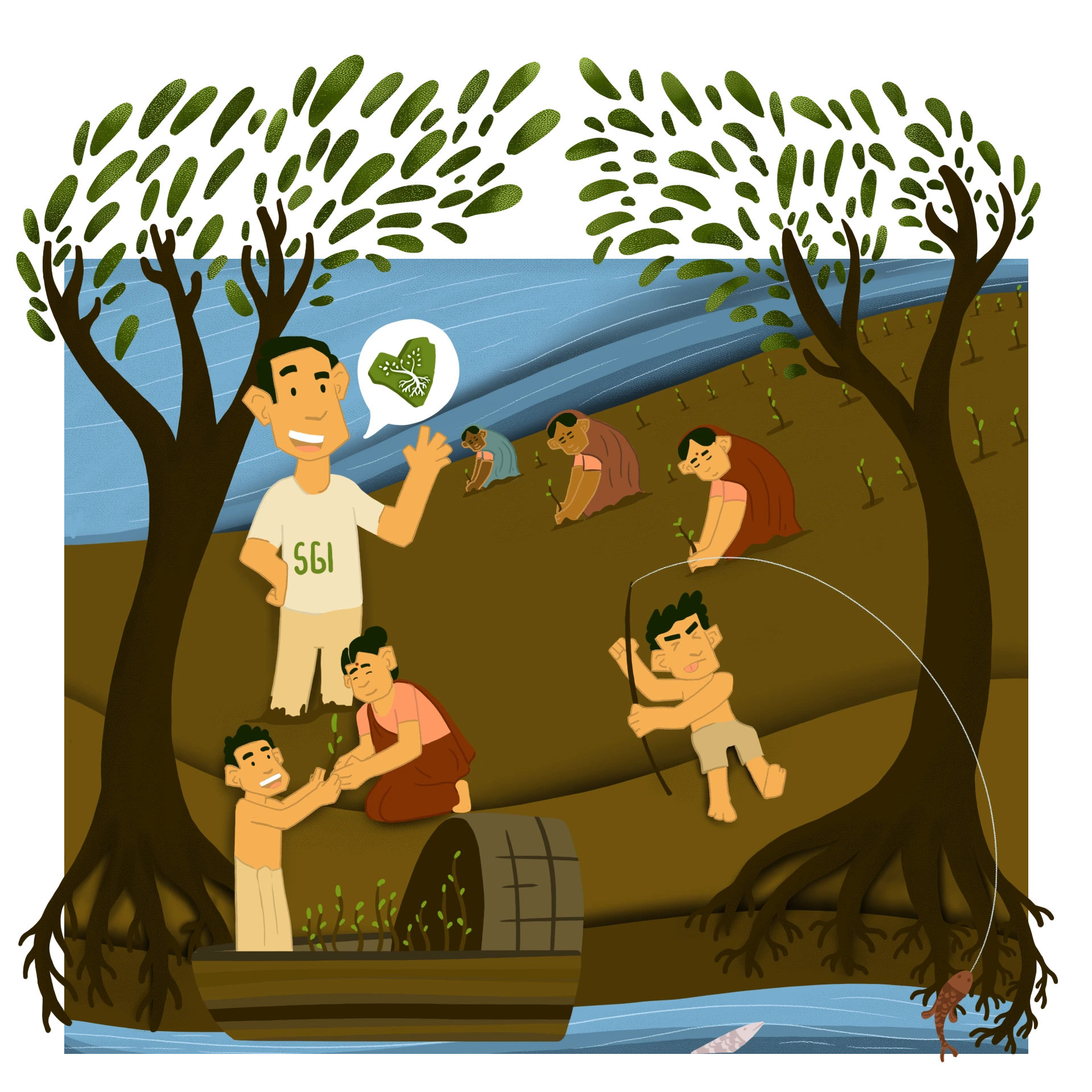
- Selection of locations on riverine islands with available land, matching species to geographic conditions and specific purposes like erosion control or wind protection
- Gaining relevant approvals from local panchayats
- Engaging with community and conducting education and awareness sessions
- Establishing nurseries that mimic the natural jungle conditions specific to each site
Planting
- Preparation of planting plans detailing what species will be planted, when and where
- Formation of mangrove management committees for community ownership
- Site cleaning and revival of old tidal channels for irrigation
- Distribution of species mixes that mirror natural planting patterns
Monitoring & Evaluation
- Community watchers conduct regular maintenance and report threats
- Survival tracking through random sampling and drone imagery
- Statistical monitoring with random plots covering at least 1% of each planting area
- Communities take increasing ownership as watchers bridge the plantation and the community
The choice we face
Here’s what we’re losing: Coastal erosion accelerates while climate disasters intensify. Communities watch their protection disappear as industrial development prioritizes short-term gain over long-term survival.
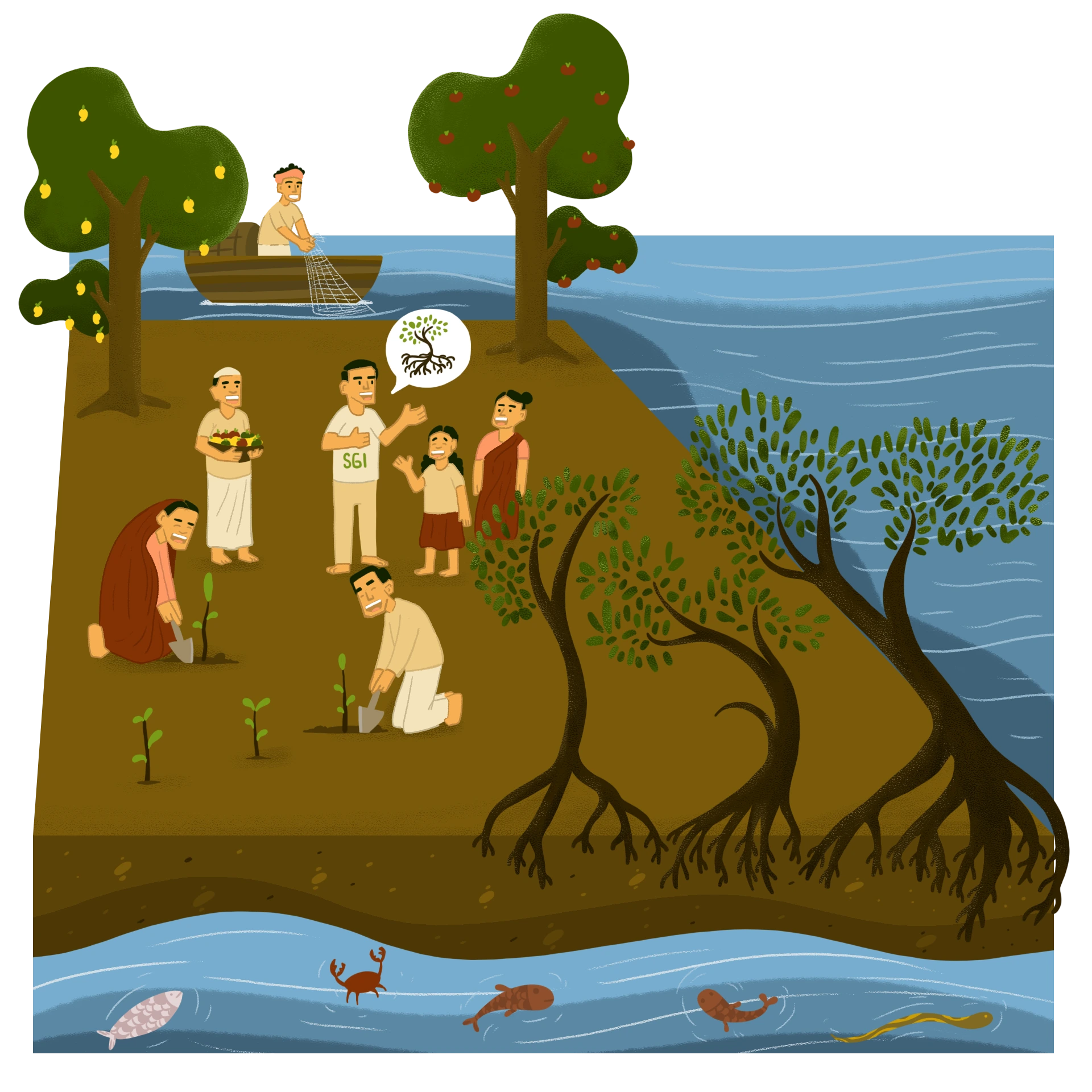
Here’s what’s working: Communities are already proving that restoring mangroves creates jobs, shields against storms, captures carbon, and rebuilds the ecosystems that sustain coastal life.
Through strategic mangrove restoration, we’re providing employment to vulnerable populations, addressing forced migration, and ensuring over 50% of restoration work engages women. These forests restore biodiversity and deliver climate justice to frontline communities.
We don’t need to choose between economic development and environmental protection. We need to accelerate restoration that delivers both.
Ready to restore a coastal forest?